Identify the surface
Establish whether the boards are timber or composite and note age, wear and previous finishes.
Southampton · Bournemouth · Hampshire · Nearby Dorset
Timber and composite decking can respond differently according to age, surface condition, previous coatings, organic growth and weathering. We inspect those factors before choosing how to clean the surface rather than subjecting every deck to maximum pressure.
Cleaning
From £6/m²
Minimum charge
£150
Choose Decking in the existing Exterior Care estimator.
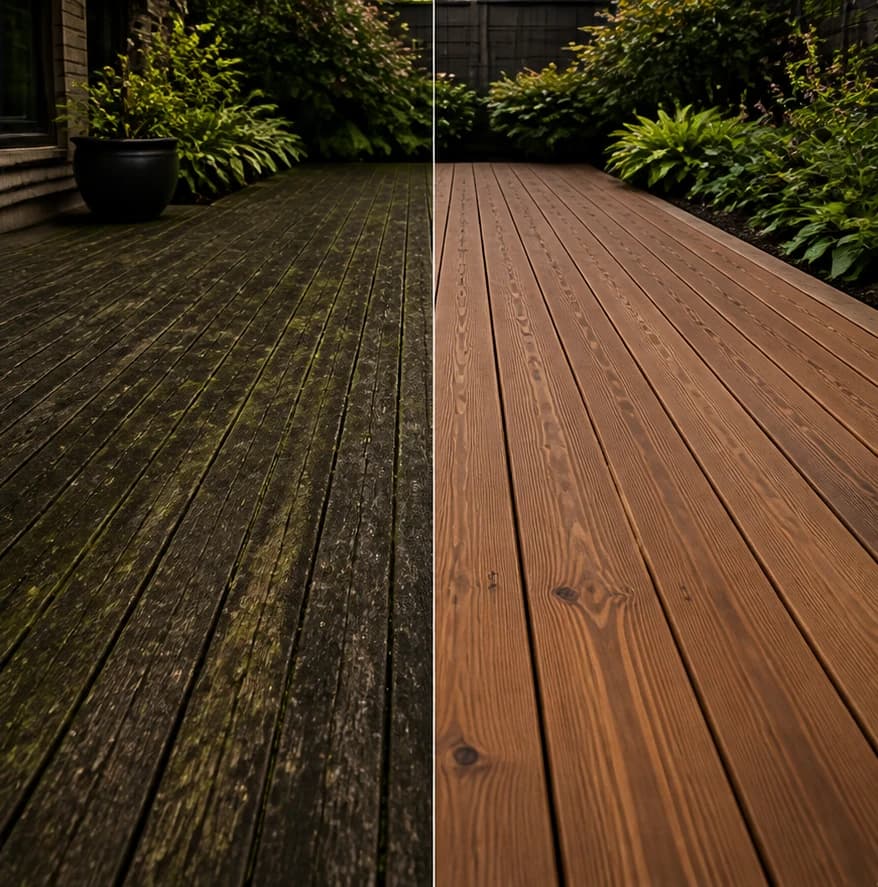
Material identification · Controlled cleaning · Clear expectations · Practical aftercare
Establish whether the boards are timber or composite and note age, wear and previous finishes.
Match treatment, flow, pressure, distance and technique to the deck rather than using one setting.
Review drying, remaining marks and any future protection without assuming every deck needs a coating.
Common decking conditions
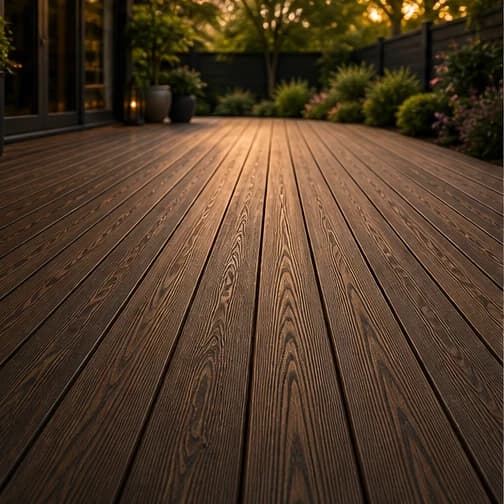
Foot traffic, airborne dirt and repeated exposure can leave boards dull, uneven-looking or discoloured.
Shaded or damp areas can develop surface growth that changes appearance and may feel slippery underfoot.
Organic matter can gather between boards, at edges and in sheltered areas, sometimes needing targeted preparation.
Board profiles and textured finishes can hold contamination that needs careful cleaning rather than a rushed pass.
Food, planters, metal furniture and other sources can leave marks that may improve without disappearing completely.
An existing or failing finish can change how the surface responds and may limit the result available from cleaning alone.
Why the material matters
The safest effective method starts with the boards themselves—not an assumption that every deck will respond in the same way.
Timber decking
Age and overall condition, grain, surface vulnerability, weathering, previous coatings and damaged boards all affect the cleaning approach and achievable result.
Composite decking
Construction, manufacturer guidance, surface finish, staining and previous cleaning or treatments can change the approach. Composite products should not be treated as though they are identical.
Pressure and technique
Pressure-assisted cleaning can be useful. Maximum pressure is not the goal.
Pressure, distance, flow, treatment and working technique need to suit the type of decking and how it responds during cleaning.
Overly aggressive technique can cause avoidable damage, particularly on softened timber, worn finishes, vulnerable edges or already deteriorated boards. That does not mean pressure washing is inherently wrong for every deck.
The aim is to remove the build-up while respecting the boards underneath it.
The method
We establish the board type and review age, wear, fixings, joints and damaged areas.
Previous coatings or treatments, softer sections and deteriorated boards are noted before work begins.
Furniture is cleared and nearby walls, glazing, plants and drainage routes are considered.
Organic growth or established grime may receive a targeted product suited to the surface.
Pressure, flow, distance and working technique are adjusted to the boards and how they respond.
Accessible grooves, edges and connections are checked as residue and loosened contamination are rinsed away.
We inspect the finished surface and discuss drying, maintenance and sensible next steps.
Organic growth and slipperiness
Algae, green film and moss can accumulate on decking, particularly in shaded, damp or slow-drying areas. That build-up can make the surface unpleasant and may contribute to a slippery feel.
Cleaning can remove surface growth and grime, while routine care and managing debris help reduce future accumulation. Weather, moisture and the surroundings mean growth can return, so a permanent non-slip outcome or fixed regrowth period cannot be promised.
Aftercare and protection
Material, existing finish, surface wear, retained moisture, drying, the finish you want and manufacturer requirements can all influence future care.
A protective product or further finish is not included automatically and should be assessed separately. The estimator flags timber/composite sealing selections for closer review rather than treating protection as a standard decking add-on.
Black Haven does not assume that every cleaned deck needs oiling, staining, sealing or refinishing.
Transparent guide pricing
Choose Decking, add approximate measurements and identify the boards as Timber or composite. Photographs help Black Haven confirm material, build-up and any areas that need a closer review.
These guide values come from the same area and material rates used by the Exterior Care estimator. Final scope depends on measurements, board type, visible condition and photographic review.
Practical expectations
Equipment needs reasonable access, while furniture, pots and loose items should be moved from the agreed area.
An exterior water supply may be required, and runoff routes are reviewed before the cleaning method is confirmed.
Nearby finishes, windows and planting are considered during preparation, treatment and rinse-down.
Shade, airflow, temperature, moisture and rainfall all affect how quickly the boards dry after cleaning.
Cleaning cannot repair split, softened, loose or deteriorated boards, and vulnerable sections may limit the method.
The agreed area is checked after cleaning so remaining marks, drying and future care can be discussed clearly.
Before booking
Black Haven decking cleaning starts from £6 per square metre, subject to the £150 minimum job charge. The guide depends on measurements, material, visible build-up and any areas that need closer review.
Pressure-assisted cleaning can be appropriate, but the setting and technique must suit the deck. Surface wear, distance and flow all influence the approach.
Black Haven assesses both timber and composite decking. Products and board constructions vary, so we check the boards and their finish before confirming the method.
Green algae and organic film can usually be treated and cleaned, with preparation adjusted to the level of build-up. Shaded or damp conditions mean future growth can return.
Moss and loose organic build-up can be addressed when present, including around accessible edges and board junctions. Cleaning does not prevent spores or new growth from returning later.
Removing surface algae, moss and grime can improve the cleanliness and feel of affected decking, but no permanent non-slip result can be guaranteed. Board design, wear, moisture and future growth still matter.
Local marks are assessed individually. Some respond well to cleaning or targeted treatment, while absorbed, historic or coating-related stains may improve without disappearing completely.
There is no universal drying time. Material, shade, airflow, temperature, board spacing, retained moisture and weather all affect when the deck is sufficiently dry.
Potentially, but the existing finish may be worn, patchy or incompatible with some methods. We inspect it first and explain if cleaning alone cannot create an even appearance or remove the old coating.
Not every deck needs or accepts the same treatment. Any protective product or further finish should be assessed separately against the material, existing coating, moisture, the finish you want and manufacturer guidance.
Start with the boards
Build a guide from area, material and visible build-up. Black Haven reviews the surface and photographs before the final scope is agreed.